
Collection Agency vs Fixed-Fee Follow-Up: Why Paying 20–25% Commission Hurts Your Margin
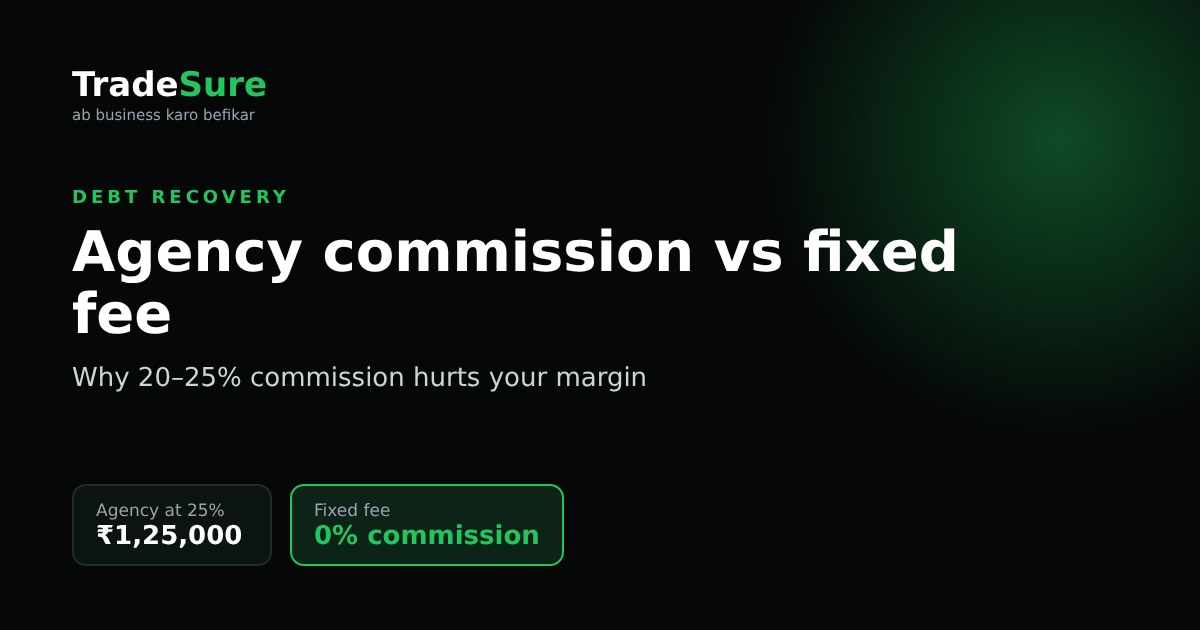
Quick answer: A collection agency charging 20–25% of the recovered amount can take more than your entire profit on that sale. For most B2B dues that are only weeks or months overdue, regular fixed-fee follow-up costs far less and keeps the customer relationship intact. Agencies make sense mainly for old, disputed or very large dues.
When a customer stops paying, the first instinct is to “give it to someone who can recover it.” Many recovery agencies promise “no recovery, no fee.” It sounds risk-free.
But the fee you pay when they do recover is where the real cost hides.
How do collection agencies charge?
Most recovery agencies work on commission: a percentage of whatever they recover. Rates vary with the age and size of the dues, and 20–25% is a common range for business accounts. Some also add legal or field-visit charges.
Fixed-fee follow-up works differently. You pay a set charge for the service, such as reminder calls and follow-up calling, and keep 100% of what your customer pays.
What does a 25% commission really cost you?
For example (illustrative figures), take a distributor with ₹5 lakh stuck with one dealer, earning an 8% net margin on sales.
| Amount | |
|---|---|
| Dues recovered | ₹5,00,000 |
| Agency commission at 25% | ₹1,25,000 |
| Your net profit on that ₹5 lakh of sales (8%) | ₹40,000 |
| Result after commission | ₹85,000 loss on the deal |
The commission is more than three times the profit you made on the sale. You recovered your money, but the transaction still lost you money.
With fixed-fee follow-up, the cost doesn’t grow with the size of the dues. Recover ₹50,000 or ₹5 lakh, and the fee stays the same.
When does a collection agency make sense?
An agency or legal route is reasonable when:
The dues are very old and the customer has stopped responding completely.
The amount is disputed and needs legal notices or arbitration.
The customer has closed the business or can’t be traced.
For micro and small enterprises, the MSME Samadhaan portal is another option for dues past 45 days, with no commission at all.
Why early, fixed-fee follow-up recovers more
Most unpaid invoices are not fraud. They are delays: a busy customer, a cash crunch, or simply your invoice sitting at the bottom of the pile. Consistent, polite follow-up fixes most of these before they become bad debts.
The earlier you follow up, the more likely you are to get paid, and the cheaper it is to do.
How TradeSure helps
TradeSure offers AI payment reminder calls and follow-up calling for defaulter customers at fixed charges. TradeSure takes no commission on the dues you recover, so every rupee your customer pays stays with you.
Before giving credit next time, run a TradeSure Trust Score check to spot risky customers early.
Ab business karo befikar. Start with TradeSure.
FAQ
How much do collection agencies charge in India? Most charge a commission on the amount recovered, often around 20–25% for business dues, and sometimes extra for legal or field work. Rates depend on the age and size of the dues.
What is fixed-fee payment follow-up? A service where you pay a set charge for reminders and follow-up calls instead of a percentage of what is recovered. You keep the full amount your customer pays.
Is “no recovery, no fee” really free? Only if nothing is recovered. When the agency recovers your money, it keeps its commission, which can be larger than your profit on the sale.
Can I recover MSME dues without an agency? Yes. Micro and small enterprises registered on Udyam can file a delayed payment complaint on the MSME Samadhaan portal for dues past 45 days.
When should I start following up on unpaid invoices? Right after the due date. The longer an invoice stays unpaid, the harder and costlier it becomes to recover.